


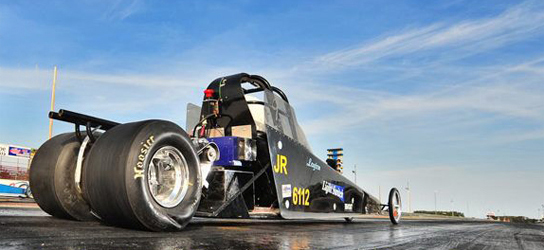
 Junior Dragsters
Kids from 8 to 17 years old can enjoy the thrill of racing electric on the drag strip and be recognized as a NEDRA Junior Record Holder.
In 2010, the NHRA approved electric powered junior dragsters (EPJDs)to race against gas junior dragsters. NEDRA expects more interest inthe sport as a result of the change in the NHRA rules and we are here to help those who are interested in building these vehicles.
Electric Powered Junior Dragster Class Designation begin with JR/xy.
where x = Age Class and y = Voltage Division.
For example, a junior racer who is 14 years old and racing a 72 volt dragster would be in Class JR/AH
| Class | Description |
|---|---|
| JR/Ay | Ages 13 to 18: Voltages 0-144* |
| JR/By | Ages 10 to 12: Voltages 0-96** |
| JR/Cy | Ages 8 to 9: Voltages 0-48*** |
** JR/B drivers shall not run quicker than 8.9 seconds in the 1/8th mile OR 4.5 seconds in the 330ft, or faster than 85 mph.
***JR/C drivers shall not run quicker than 12.9 seconds in the 1/8th mile OR 6.5 seconds in the 330ft, or faster than 85 mph.
Electric Powered Junior Dragsters are limited to NEDRA Voltage divisions E though K
| Division | Nominal | Measured |
|---|---|---|
| JR/xE | 121V - 144V | ;132.1V - 158.4V |
| JR/xF | 97V - 120V | 105.7V - 132.0V |
| JR/xG | 73V - 96V | 79.3V - 105.6V |
| JR/xH | 49V - 72V | 52.9V - 79.2V |
| JR/xI | 25V- 48V | 26.5V - 52.8V |
| JR/xJ | 13 - 24V | 13.3 - 26.4V |
| JR/xK | 0 - 12V | 0 - 13.2V |
Records will be recorded only up to the legal NHRA limits for the Junior Dragster Class according to age groups. If any time slips are submitted for records quicker than the limit, the record will be recorded as that limit. NEDRA will only keep records for the first three cars to submit time slips at the legal limit and will be duly designated and “1st to reach”, “2nd to reach”, and “3rd to reach” at which time the voltage division record will be permanently retired.
It is expected that at some point in the future the higher voltage divisions will be retired as it may be fairly easy to reach those limits at the higher voltages. However it is anticipated that records for the lower voltage divisions will be around for long time to come until limits are reached.
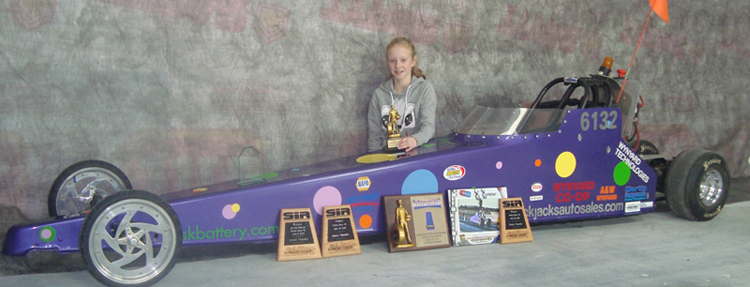
2012 NHRA Jr Rulebook (PDF file): http://jrdragster.nhra.com/rulebook/
ELECTRIC JR. DRAGSTER RULES SUPPLEMENT
(DRAFT 10Jan2010_MGW)
Requirements and specifications for Electric Jr. Dragster are the same as those for NHRA CASTROL GTX Jr. Dragster with the following exceptions.
MOTOR: 1
Motor
All vehicles are restricted to a maximum of one (1) rear mounted electric motor.
FRAME: 4
Weight
ELECTRICAL: 8
Batteries
Wet (free liquid) batteries prohibited. All Batteries must be securely mounted outside of and completely sealed from driver compartment. Batteries may not be located above top of drive tires or outside of frame. Batteries must be mounted as per requirements listed in current NHRA rulebook section 1F - ELECTRIC POWERED VEHICLE. Traction motor and/or high-current wiring may not be located in drivers compartment. Instrumentation wiring permitted. All traction wiring must be isolated from vehicle chassis.
Fusing of Batteries
All battery packs must have over-current protection. Circuit breaker or fuses permitted. Devices must have a DC voltage rating equal to or greater than nominal pack voltage. Current rating must be lower than master disconnect, wiring and battery pack can carry without damage. Battery sub-packs must be individually fused.
Ignition
All vehicles must be equipped with a switch, attached to driver with a lanyard, capable of shutting off all power to motor. Switch may actuate
relay or contactor. Solid state switch prohibited. A flashing yellow light must be affixed to top of roll cage indicating when electrical system is energized.
Master Cutoff
All vehicles must incorporate a master electrical disconnect switch that disables all electrical functions. Switch must be located on deflector plate no more than three inches from top of roll cage. Must be clearly labeled as to off position. Must disconnect all power from motor. Switch may actuate relay or contactor.
Recharging
Batteries may be recharged in pits or other designated areas only. Polarized plug connection to battery pack from charger mandatory.
Voltage
Maximum permitted operational voltage 144 volts nominal. Voltage checked
at battery pack. No load using digital voltmeter. Maximum fully-charged battery pack voltage shall not exceed 156 volts.
Refer to current NHRA CASTROL GTX JR. Drag racing League Rulebook and the NHRA Rulebook section 1F for additional requirements or regulations.
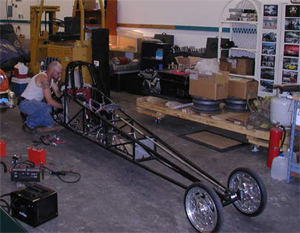
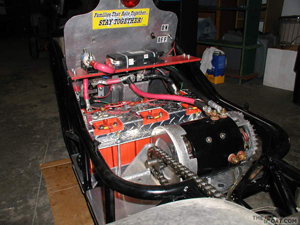
Building an electric junior dragster can be a rewarding experience. The advantages of the juniors are easily apparent. They take off smooth and fast. The motor's torque can provide some impressive 60 foot times. EPJDs don't require a seperate starter and as a result don't need to be towed or pushed to the starting line unless you want to save the battery charge or if the track only allows Jrs to be towed. Just go under your own power.
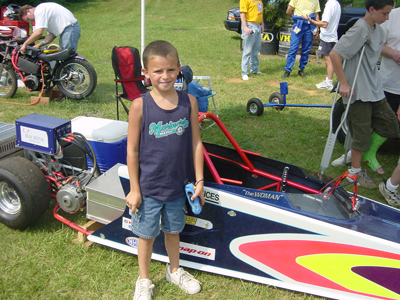
Typical parts used in the electric junior dragster:
6.7 inch or similar sized motor
Advanced DC, D&D, Scott and WarP motors
Motor Controller
For the lower voltages up to 72 volts consider Alltrax. For all voltages
above 72 volts consider the Zilla, Logisystems, Kelly, Raptor and Curtis.
Throttles
Curtis is popular, particularly the PB-6. The Zilla has an integrated HEPI pedal (HallEffect). The Raptor controller
Cabling
2/0 and 1/0 welding cable is commonly used for battery interconnectsand high voltage cabling between the motor and controller
Circuit Breakers and Contactors
An emergency/service circuit breaker is needed for quick disconnects. Heinneman circuit breakers are widely used as well as Albright and Bubba contactors which are big relays that switch on the high power.
Batteries
Only sealed batteries are allowed. Most commonly used are sealed
lead acid batteries and lithium. Hawkers are popular among drag racers.
Many use 12 volt 16 Ah. Lithium is available. Thundersky's can be bought
off the shelf although there is a waiting period. Custom made lithium
packs are commonly done today.
Helpful Formulas
Use the handy calculator on Jr Dragster Plus website
http://www.jrdragsterplus.com/geargrndr.htm
Jackshaft Axle RPM = (1/ Final Clutch Ratio) x Motor RPM
Most EPJDs are direct drive and don't use a clutch
Ratio = Rear Sprocket / Front Sprocket
MPH = (Jackshaft Axle RPM x rollout / 1056) / Ratio
where 1056 represents the number of inches in a mile (63360) divided by the the number of minutes in an hour (60)
New Ratio = the inverse of (mph x 1056) / (RPM x New Rollout)
where 1056 represents the number of inches in a mile (63360) divided by the the number of minutes in an hour (60)
Rollout = Diameter x pi
where pi has been estimated to 3.1415962. Note that diameter can be affected by tire pressure.
EPJD with an 18.5 inch diameter tire and motor running 5000 rpm. 15 tooth front sprocket and 72 tooth rear sprocket. Direct drive with no clutch.
MPH = (5000 x 58.09/1056)/4.8 = 57.30 mph
Jr Dragster Parts
Motivational Tubing PDF CatalogBatteries
Hawker Energy
LithiumStart
Optima
Trojan BatteryChargers and Battery Monitors
Manzanita Micro
Controllers
AllTrax, Inc
Cafe Electric
DC Power Systems
D&D Motor Systems, Inc.
LogiSystems ControllersEV Parts
Canadian Electric Vehicles Ltd.
Cloud Electric
Electro Automotive
EV America
EV Components
EV Parts
EV Source
KTA Services
Thunderstruck Motors
Motors
WarP Motors
D&D Motor Systems, Inc.Motors and Custom Built/Rebuilt Motors
Hi-Torque Electric
Dennis Berube Motors
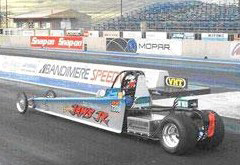 The
pioneers in EPJD racing are Brent Singleton and his father Kent. Brent
started out racing gas juniors but saw the potential electric power
"Jaws Jr" raced all over the western part of the US running 84 mph in the 1/8. It was a challenge. Not building the electric version but being accepted. Electrics weren't permitted to race against the gassers except for a few demonstration runs. As Brent promoted EPJD racing at the strip, NEDRA members Bill Dube and Roderick Wilde approached the NHRA to have EPJDs added to the Jr. Rulebook.
The
pioneers in EPJD racing are Brent Singleton and his father Kent. Brent
started out racing gas juniors but saw the potential electric power
"Jaws Jr" raced all over the western part of the US running 84 mph in the 1/8. It was a challenge. Not building the electric version but being accepted. Electrics weren't permitted to race against the gassers except for a few demonstration runs. As Brent promoted EPJD racing at the strip, NEDRA members Bill Dube and Roderick Wilde approached the NHRA to have EPJDs added to the Jr. Rulebook.
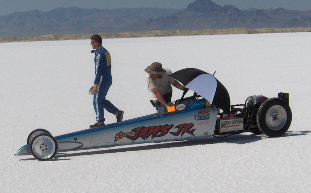 As the challenge continued to get EPJDs accepted Brent and his father took to racing Jaws Jr at the salt flats. They swapped out the jr drag slicks or taller salt flat tires and adjusted the gearing. Today they are advocates for the salt flats and active in promoting electric salt flat racing helping to organize several events each year.
Other pioneers in early Jr dragster were "Electric Louie" Finkle. In 1999, Louie converted a Jr. Dragster for the Hendric's family which was driven by Donny Hendrics. The car was 120 volts and could top 85 mph easily. Eric and his wife Tracy Miller built an electric dragster for Tracy and his nephew Eric to race. Since EPJD's weren't allowed to race competitively they found a niche with smaller adults like Tracy. Eric also helped the Singleton's with Jaws Jr.
Today's pioneers include former NEDRA President Shawn Lawless who built an electric Jr, "Orange Blossum" for his daughter to race. Current NEDRA President, Mike Willmon, constructed a Jr called "Munkey" which is the green EPJDs shown on this page.
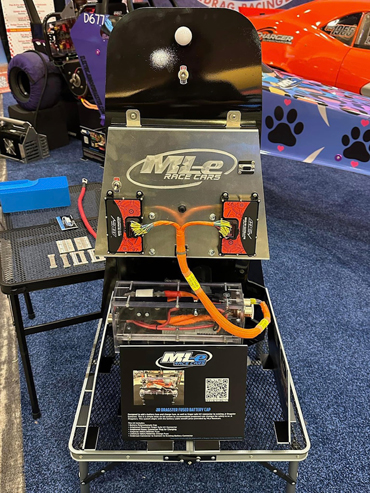
NEDRA JR NEWS - (Dec 11, 2023) ML-E Racecars has developed an answer for Jr Dragster Battery Management and charging safety concerns. They partnered with AEMEV to produce a pre-configured, pre-wired, plug and play system that will control the charger to prevent overcharging and balance the cells for improved battery life.
This is a system that is designed around the Half-Scale chassis and bolts right to the existing seat mounts. Each system is tested on a Lonestar battery pack before shipping to ensure true plug and play capability. Check out their website for pricing and contact info.
https://mleracecars.com/ev-jr-drag-parts%2Fsvcs
NEDRA JR NEWS (October 31, 2012) Canadian electric Jr racers, ten-year old Layton Krauss, races his car, Light Switch, against twelve year-old Megan, at the National Hot Rod Association National Open on July 28, 2012.
Layton races with car owner Peter Sotropa. The Light Switch crew holds the record holder for the under 13 age group, in the 1/8 mile for a 72 volt electric car. Layton set the record on Sept. 15 and holds the record with a time of 9.91 seconds. This is Layton's first year racing and his opponents mainly drive gas and alcohol dragsters.
Megan is the driver of the first electric junior dragster in Canada. Her first run was on May 28 2011 at Saskatoon International Raceway. Her best run the lead acid batteries was 11.44 and 58 mph. Her crew put in lithium A123s for 2012 best run was 10.19 fastest speed was 66 mph. Megan's Dad is building a new car for 2013.
See the Weyburn Review on Layton Krauss' 2012 season with the JR Dragster.